Thursday, October 29, 2026

Reaction To The Documentary

Reconstruction: A Timeline of the Post-Civil War Era | HISTORY

Reconstruction: A Documentary on the Fight for Freedom

After the Civil War came the Reconstruction era, a period of depression that lasted for decades. Violence was used to enforce Jim Crow, and African Americans were stripped of their rights. This documentary tells the true story of reconstructing America.

How It Began

The war ended on April 9, 1865, which was Palm Sunday, and the slaves were freed. By the summer, many of them had found safe haven. Their actions converted many Americans to emancipation, and freeing the slaves strengthened both the Union and the military.

Reconstruction was the process of American society coming to terms with the consequences of the war. The North and the South saw it very differently.

Abraham Lincoln - Wikipedia

A New President

President Abraham Lincoln gave a speech suggesting that all Black men deserve the right to vote. John Wilkes Booth killed him for making that speech. Andrew Johnson was sworn in next, making him the first president sworn in after an assassination.

During Reconstruction, the Republican Party was the party of civil rights and of African Americans. Johnson believed the planter class caused the war. Frederick Douglass doubted the new president and could tell that Johnson did not like African Americans.

Land Taken Back

In 1865, Oliver Howard created the Freedmen’s Bureau to make sure Black people were treated fairly and that relations between white and Black Americans were fair on both sides. The Bureau had a lot of land.

Within weeks, things did not go to plan. Johnson was undermining the results of the war, and he thought he could handle Reconstruction perfectly. People he had hated came to him asking for forgiveness. Then Johnson ordered Howard to give all the land back to the Confederates. The freed slaves refused to leave and began to sing. Howard was devastated to see it.

A South in Ruins, and a Violent Backlash

The South was devastated. The Confederates had destroyed their own economy and torn their families apart, and they did not care about freeing the slaves. People were targeted for having a lot of land, and others tried to destroy everything they had. The Republicans were ready to help the South and end its suffering.

Meanwhile, free people were on the move from the farms to the cities. The crowds this created made white southerners angry. They began shooting at freed people and starting violence, hunting for Black people.
The 14th Amendment is Adopted - African American Registry

The 14th Amendment

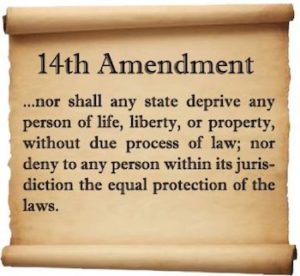
The 14th Amendment gave rights to people and to all Americans. By the spring, the Republicans were in control, and Reconstruction entered a bold new phase. They began to reorganize the South and ratified the 14th Amendment, which became the law of the land in July.

General Election Day! Vote at the Polls! - Osceola County, Iowa

Election Day

November 3rd was an election day like no other. In New Orleans, white gangs terrorized Black voters, and African Americans had to arm themselves in order to vote because they feared the violence. Every southern state voted for Ulysses S. Grant, who crushed the Confederacy.


Tuesday, October 27, 2026

Plessy v Ferguson


Know Your NOLA: Homer Plessy Way | Very Local

“Reasonable” by Whose Standards? How Custom Won Plessy v. Ferguson

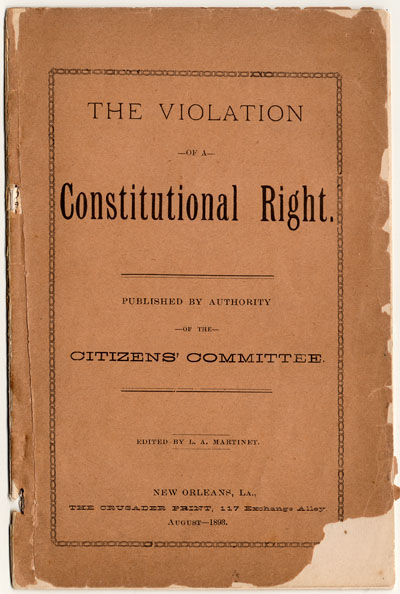
In 1892, Homer Plessy bought a first-class ticket on a Louisiana train, took a seat in the whites-only car, and was arrested. The arrest was planned. A group of New Orleans citizens, the Comité des Citoyens, wanted to challenge Louisiana’s 1890 Separate Car Act, which required “equal but separate” railway accommodations by race. Plessy lost in the state courts, including before Judge John Howard Ferguson, and appealed. In 1896, the U.S. Supreme Court upheld the law seven to one.

To understand why, it helps to follow the argument that won. This post lays out that reasoning, because understanding it is how we learn to recognize it.

The Argument from Police Power

Louisiana’s defense rested on the “police power,” a state’s authority to pass reasonable laws protecting public health, safety, and order. The state argued that separating passengers was an ordinary use of that power. Because the law required equal accommodations for both races, it claimed no one was denied anything.

Plessy v. Ferguson: The Organizing History of the Case - Zinn Education  Project

Custom as Proof of Reasonableness

The harder question was what counts as “reasonable.” Writing for the majority, Justice Henry Billings Brown said reasonableness could be measured by the “established usages, customs, and traditions of the people.” In other words, if separation was already common, it was reasonable.

Brown pointed to examples. Massachusetts had upheld segregated schools in Roberts v. City of Boston (1849), and Congress had maintained separate schools in Washington, D.C. If those practices were lawful, the Court reasoned, a separate railcar was too.

Legal Equality vs. Social Equality

The majority also drew a line between two kinds of equality. The Fourteenth Amendment, Brown wrote, was meant to secure legal equality, not to abolish distinctions based on color or enforce social mixing. He added that social prejudice could not be overcome by legislation.

On the claim that segregation stamped Black citizens with a badge of inferiority, Brown said any such meaning existed only because Black Americans chose to put that construction on it.

Home — The Plessy & Ferguson Initiative

Where the Argument Breaks Down

This is where the case becomes useful for a class on freedom. The reasoning has a built-in problem: custom is made by those with power. If tradition defines what is reasonable, then a majority’s habits can justify nearly anything, and the people harmed by those habits have no way to challenge them.

Justice John Marshall Harlan saw this in his lone dissent. He wrote that the Constitution is “color-blind” and knows no caste, and that everyone understood the law’s real purpose was to keep Black citizens in a subordinate place. He predicted the decision would prove as harmful as Dred Scott.

History largely agreed with him. The “separate but equal” doctrine spread through schools, transportation, and public life, and the facilities were rarely equal. In Brown v. Board of Education (1954), the Court held that separate educational facilities are inherently unequal, undercutting Plessy’s foundation.

The Takeaway

Plessy is a lesson in how persuasive an argument can sound when it borrows the language of order, tradition, and restraint. Its central claim, that familiar means reasonable, is one we still hear in other forms. The better question, then and now, is who the custom serves and who was never asked.


Tuesday, October 20, 2026

Gone With The Wind Reaction Post.


Gone with the Wind (novel) - Wikipedia

In class today we watched the first half of the movie Gone with the Wind by Margaret Mitchell. Watching this movie has been an interesting experience because the movie is more than just a love story. The film explores different relationships, social expectations, and the effect that war can have on a persons life. Before watching the movie I was expecting it to be a long, slow, and boring love story but I was honestly surprised by how much the story reveals on what the characters are actively living through. Although the film is definitely entertaining it also shows how the Old South is portrayed and how the history is presented through the perspectives of white wealthy southerners.  

One of the most entertaining characters so far is Scarlett O'Hara. At the beginning she came off very spoiled, selfish, and accustomed to getting whatever she wants. She loves the attention she gets and seems she can use her beauty and her charm to influence the people around her. Scarlett's feelings for Ashley Wilkes are a major part of the character because deep down she really struggles to accept that he is going to marry someone else. Even after learning that he was going to marry someone else, Ashley continues to pursue him revealing that her pride and her stubbornness usually prevent her from seeing situations clearly. At times I thought that she was very frustrating but interesting at the same time because she was so confident and determined. I am genuinely curious to see how the events of the war will affect her personality or force her to change. 

Gone with the Wind (film) - Wikipedia

Rhett Butler is also someone who stands out as one of the most entertaining characters so far because he is also very confident, outspoken, and willing to challenge the expectations of southern society. He is different from a lot of the other characters because Rhett is not concerned with his image or following all the social rules. His interactions with Scarlett are intriguing because he can see her selfishness and is not fooled by her charm. Their conversations usually contain tension, humor, and a lot of competition. I truly believe that Rhett understands Scarlett more than she even understands herself which is why their relationship is so complicated. Although they do seem like they are attracted to each other their personalities create conflicts and get in the way. Their relationship is one of the aspects of the movie I am most interested in following. 

The relationship between Ashley, Scarlett, and Melanie also reveals a lot about the characters. Scarlett wants Ashley mostly because she cannot accept the fact he chose someone else. Ashley on the other hand represents everything Scarlett wants romantically. Melanie is portrayed as kind, gentle, and devoted to Ashley which is why she is some different from Scarlett. I believe it is very interesting that Scarlett often underestimates Melanie because she sees her as very weak. However, Melanies kindness and calm personality are signs of strength and not signs of weakness. These differences can show how people can misunderstand one another when they judge others based off of appearance. 

Gone with the Wind returns to theaters in 4K digital

Another important part of the film is the way the civil war begins to change all the characters lives. Earlier on in the movie the characters are focused on parties and social statuses. They really seemed to believe that their comfortable lifestyles will continue without major interruptions. However, as the war approached the mood of the film begins to shift. The excitement surrounding the conflict initially makes it seem like some sort of adventure to a bunch of the characters but the consequences are increasingly serious. The war threatens the security and traditions that have shaped all their lives. This change made me think about how people sometimes fail to understand the seriousness of a major event until it directly affects them. 

Altogether, The first part of the movie held my attention because of the memorable characters, dramatic relationships, and all the changes in the historical settings. Scarlett is not always likable but all of her determination makes her a compelling character. Rhett adds humor, while Ashley and Melanie provide a contrast to all of Scarletts emotions. The approaching war also creates uncertainty about what will happen to the characters and their way of life. After the intermission I am interested in in seeing how Scarlett responds as the world she knows begins to fall apart. I expect the challenges ahead to reveal more about her character and if she will be able to move past her selfishness so she can be more independent. The film has been engaging but has also reminded me of the importance of questioning how movies portray history and whose experiences they emphasize.