Monday, September 21, 2026

Thaddeus Stevens


Thaddeus Stevens - Wikipedia


Fellow citizens,

I have been asked why a lawyer and legislator would spend his best years quarreling over the rights of people who cannot vote for him. The answer is simple. The wrong is real, and silence makes us partners in it.

I came to Pennsylvania in 1816 to practice law. I had seen slavery at close range, and I did not need a sermon to tell me what it was. Since then I have defended fugitives in our courts and never charged them a fee. I also spent years in the state legislature defending free public schools, because a people who cannot read cannot govern themselves. Justice that only the wealthy can afford is not justice at all.

In 1837, I sat at the convention that rewrote our state constitution. The delegates wrote in a clause limiting the vote to white freemen, which took the ballot from every Black Pennsylvanian. I refused to sign. A constitution that divides free people by color has no claim on an honest man's signature.

Now, as your representative in Congress, I have watched the Compromise of 1850 pass, and with it the Fugitive Slave Act. Its defenders call it peace. I call it a bargain paid for with other people's liberty.

Consider what the law actually does. A federal commissioner may order a person returned to bondage on the claim of a supposed owner, without testimony or trial. It offers no protection to a free Black man wrongly seized. And it fines or jails any citizen who aids a fugitive. Such a law asks each of us to become a slave catcher or a criminal.

I told the House that I abhor the word compromise when it is applied to human rights. I have not changed my mind. Rights are not goods to be haggled over across a table. Either a person owns himself, or he does not.

Some will say this is not Pennsylvania's fight. I say it is exactly our fight. A free state that hunts men on behalf of another state's masters has surrendered its own dignity. We cannot call ourselves free while we help enforce bondage.

The consequences are already at our door. When Black men accused of killing slave hunters at Christiana stood trial in our own county, I stood with them. We won that case, and I would take it again.

So what do I ask of you tonight? Refuse to lend your hands to this law. Stand with those who resist it. And tell your representatives that freedom for every person is not open to bargaining.

History will not remember those who kept the peace at any price. It will remember who stood with liberty when it was costly. Let us be found among them.


AI DISCLOSURE: AI was used. I put in a prompt to tell me about Thaddeus Stevens and then did research on it. I used Claude AI to help me clean up the text for grammar, spelling, and punctuation. I also asked the tool to help me shape it into the form of a blog post. I then edited the text, added links, and added images with end captions. 

Mock Trial Notes


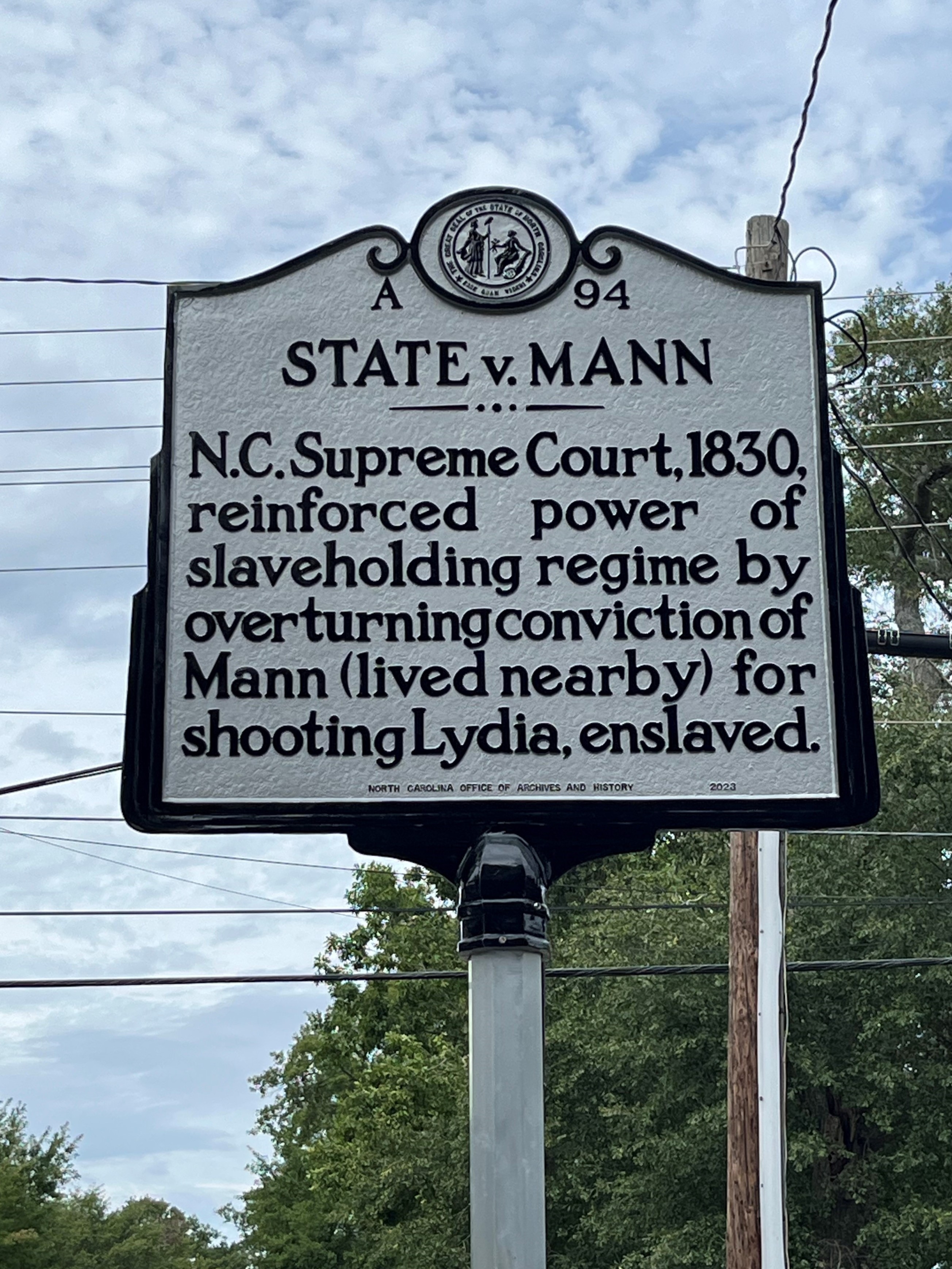
State v. Mann (A-94) | NC DNCR


In class, we held a mock trial built around one of the most troubling cases in American legal history, State v. Mann. The North Carolina Supreme Court heard it in 1829, in an America that believed it could be better but had not yet decided to become so. 

The case asks a question that still matters: who does the law protect, and who does it leave out?

The facts are short and hard to read. John Mann, a white man in Chowan County, North Carolina, had hired an enslaved woman named Lydia from her owner for a year. 

Mann was not her owner, only her temporary master. When he moved to punish her, Lydia ran. Mann shot her as she fled.

Local authorities treated the shooting as a crime. A grand jury indicted Mann for assault and battery, and the trial judge told jurors that if the punishment was cruel and out of proportion to Lydia's offense, Mann was guilty, especially since he was not her owner. The jury agreed. The penalty was a fine of five dollars.

That number deserves a moment of attention.

Five dollars measured what the state thought Lydia's suffering was worth, and it was worth almost nothing. The law was willing to notice the harm, but not to take it seriously.

Even so, Mann refused to pay. He appealed to the state's highest court, insisting that the fine was unfair and that the state had no right to punish him at all.

That is where our mock trial began. 

The State argued that the case had to be understood inside its moment. Around 1830, the country was in a period of moral awakening. 

Religion carried real weight in daily life, and that spiritual energy was feeding the growing abolition movement. Churches and town hall meetings became places of self-reflection and moral courage, where ordinary people asked whether the nation could live up to its own ideals. 

The State also made a practical point: slavery slowed overall economic development, so it was neither just nor wise.

Mann's lawyers answered with a cold, simple theory. Enslaved people, they argued, were property. Property cannot feel pain. Property has no human rights. If those three sentences were true, then Lydia had been wronged no more than a broken tool.

They were not true, of course, but the law of that era gave them enormous force.

The real Supreme Court sided with Mann. Justice Thomas Ruffin wrote the opinion and reversed the conviction, declaring that the master's power had to be absolute. Ruffin did not hide his discomfort. 

Historians note that he had little sympathy for slavery as a matter of personal feeling, yet he wrote one of the harshest pro-slavery opinions ever issued by a state court. He also extended that absolute power to a hirer like Mann, who did not even own Lydia.

The decision did not end the moral argument. It did the opposite.

Abolitionists in the 1850s pointed to State v. Mann as proof of what slavery did to the law itself: it turned judges into defenders of violence and turned the courtroom into a place where a wounded woman had no standing.

Here is what I take from the trial. 

The State's arguments about conscience, religion, and moral courage were the ones history would eventually vindicate. But the law of the day sided with the man who claimed a person was property. 

That gap between what people believed was right and what the law allowed is exactly why the abolition movement mattered. A nation can believe it is capable of better long before its institutions agree.

Freedom did not arrive on its own. It was argued for, in churches, in town halls, and in courtrooms, by people willing to say that the law was wrong.

State v. Mann - North Carolina History

AI DISCLOSURE: AI was used in a limited way. I put in all my notes and asked AI to turn it into a blog post. I used Claude AI to help me clean up the text for grammar, spelling, and punctuation. I then edited the text, added links, and added images with end captions. 


Tuesday, September 15, 2026

SCRIPT


Script Text Effect and Logo Design Word

In 1854, Congress passed the Kansas-Nebraska Act. This law let the settlers of the new Kansas Territory decide for themselves, by popular vote, whether slavery would be legal there. This was called "popular sovereignty." It was supposed to be a fair, democratic way to settle the slavery question locally, instead of fighting about it in Congress.

Instead, it backfired almost immediately.

Since the vote would decide the future of slavery in Kansas, both sides rushed to load the outcome. Northern abolitionist groups funded free-state settlers to move in. Pro-slavery Missourians crossed the border to vote illegally and intimidate their opponents. Within a year, Kansas had two rival governments, each claiming to be legitimate, and neither side backing down.

[pause]

Then it turned violent.

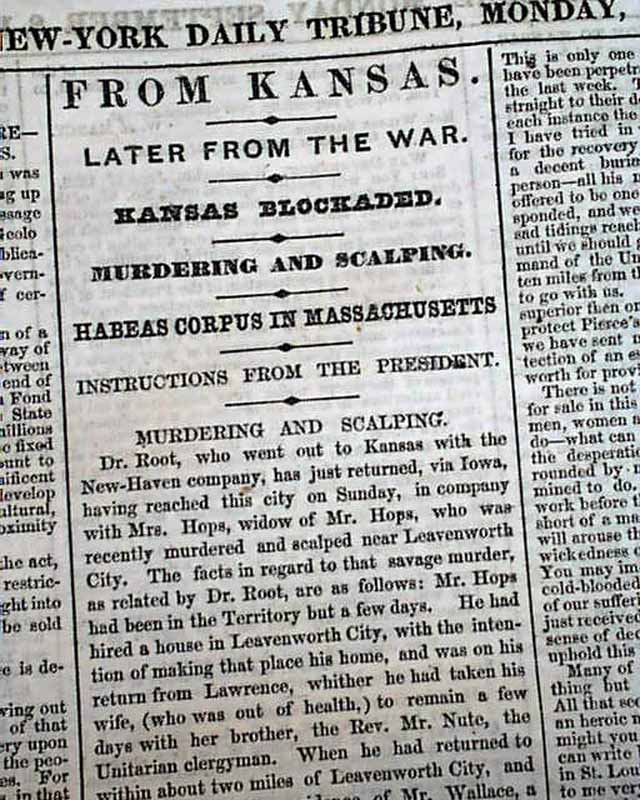
In May 1856, pro-slavery forces attacked the free-state town of Lawrence, burning buildings and destroying printing presses. Just days later, the abolitionist John Brown led a raid along Pottawatomie Creek and killed five pro-slavery settlers. Years of guerrilla violence followed. Estimates of the dead range from around fifty-five up into the hundreds. A newspaper editor coined the name that stuck: Bleeding Kansas.

The violence even reached the U.S. Senate. After Senator Charles Sumner gave a speech attacking pro-slavery violence, a congressman beat him nearly unconscious with a cane, right on the Senate floor. In parts of the South, that congressman was celebrated as a hero.

[pause — let that land]

So why does this matter?

Bleeding Kansas proved that compromise had run out. Popular sovereignty was supposed to calm the slavery debate. Instead, it turned an election into a battleground. The result helped destroy the existing political parties and gave rise to the Republican Party, built largely on stopping slavery's expansion. It also radicalized people like John Brown, who later led the raid on Harpers Ferry in 1859.

Kansas finally joined the Union as a free state in January 1861 — just weeks before the Civil War began.

By then, the country had already watched neighbors kill neighbors over this exact question. Bleeding Kansas didn't cause the Civil War on its own. But it proved the fight everyone feared was already here.

Thank you.


AI DISCLOSURE: AI was used in a limited way. I did research and various platforms and websites and then used those notes on Bleeding Kansas and put them into AI. I used Claude AI to help me clean up the text for grammar, spelling, and punctuation. I also asked the tool to help me shape it into the form of a blog post and in the form of a script. I then edited the text, added links, and added images with end captions.

ETOC: Bleeding Kansas

Bleeding Kansas"... | RareNewspapers.com


Bleeding Kansas refers to the period of political violence, roughly 1854 to 1859, that erupted in the Kansas Territory over whether it would enter the Union as a free or slave state. 


The conflict was set in motion by the Kansas-Nebraska Act of 1854, sponsored by Illinois Senator Stephen Douglas. That law organized the Kansas and Nebraska territories and, critically, repealed the Missouri Compromise of 1820, which had banned slavery north of the 36°30' line. 


In its place, the act introduced the principle of "popular sovereignty," meaning the settlers of each territory would vote on whether to permit slavery themselves. 


It sounded democratic on paper. In practice, it turned Kansas into a battleground, because both pro-slavery and anti-slavery forces understood that whoever controlled the vote would control the territory's future, and possibly the sectional balance of power in Congress.


What followed was essentially a rush to stack the population. Northern abolitionist groups, most notably the Massachusetts-based New England Emigrant Aid Company, funded and organized free-state settlers to move to Kansas. Pro-slavery Missourians, living just across the border, responded by crossing into Kansas in large numbers to vote illegally and intimidate free-state settlers; they became known as "Border Ruffians." 


The result was two rival governments claiming legitimacy at once: a pro-slavery legislature at Lecompton, and a free-state legislature at Topeka, each with its own constitution.


The violence that gave the period its name came in waves. 


In May 1856, pro-slavery forces raided the free-state stronghold of Lawrence, burning buildings and destroying printing presses in what's known as the "Sack of Lawrence." Just days later, radical abolitionist John Brown led a nighttime raid along Pottawatomie Creek, dragging five pro-slavery settlers from their homes and killing them with broadswords, an event known as the Pottawatomie Massacre. 


Skirmishes, arson, and killings continued for years, with death toll estimates ranging from around 55 to as high as 200, depending on the source and how "related violence" is counted. The term "Bleeding Kansas" itself is usually credited to New York Tribune editor Horace Greeley.


The Kansas conflict didn't stay contained to the territory. It bled directly into the U.S. Senate. In May 1856, Senator Charles Sumner of Massachusetts delivered a fiery speech condemning pro-slavery violence in Kansas and personally insulted South Carolina Senator Andrew Butler. 


Two days later, Butler's cousin, Congressman Preston Brooks, beat Sumner nearly to death with a cane on the Senate floor. Sumner needed years to recover, and Brooks became something of a hero in the South, a reaction that stunned many Northerners.


Why does this matter for a history class? Bleeding Kansas is often described as a "dress rehearsal" or preview for the Civil War, and that framing holds up well. 


First, it exposed popular sovereignty as a failure: rather than defusing the slavery question through local democracy, it turned that democracy into a target for fraud and violence. 


Second, it accelerated the collapse of the existing two-party system. The Whig Party, already strained, disintegrated, and the new Republican Party formed largely around opposition to the expansion of slavery into the territories, using Kansas as a rallying point. 


Third, it radicalized figures on both sides. John Brown, having tasted violence in Kansas, went on to lead the 1859 raid on Harpers Ferry, an act that further inflamed Southern fears of Northern-backed slave insurrection. 


Finally, the competing Lecompton and Topeka constitutions forced Congress to take sides, further dividing Democrats along sectional lines, a split that helped hand the presidency to Abraham Lincoln in 1860.


Kansas itself was eventually admitted to the Union as a free state on January 29, 1861, just weeks before the Civil War began. 


By then, the violence in the territory had already demonstrated something the nation could not walk back: the slavery question was not going to be settled by compromise or by vote. It was going to be settled by force. 


In that sense, Bleeding Kansas isn't just a regional conflict, it's the moment the abstract argument over slavery's expansion turned into actual bloodshed on American soil, years before Fort Sumter.


AI DISCLOSURE: AI was used. I put in a prompt to tell me about Bleeding Kanas and then did research on it. I used Claude AI to help me clean up the text for grammar, spelling, and punctuation. I also asked the tool to help me shape it into the form of a blog post. I then edited the text, added links, and added images with end captions. 

Thursday, September 10, 2026

8 Values


The Meaning of the Colors on the American Flag | Flags USA

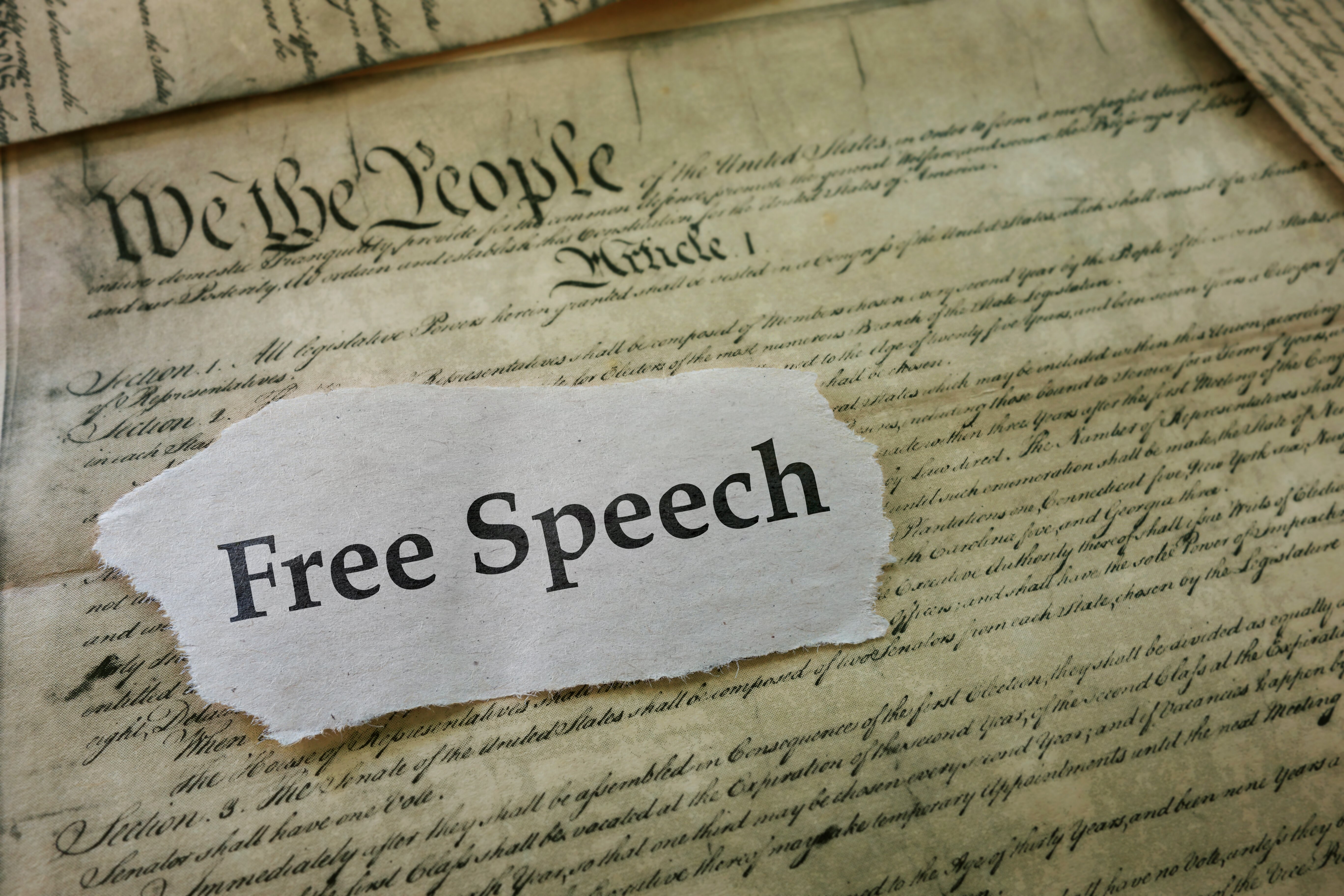
All 8 values are important to me, but the one I felt really resonated with my beliefs was Promote Innovation. Promote Innovation is crucial in the world we live in because free expression can encourage people to challenge beliefs, create new things, and share new ideas. When people express themselves by showing us their ideas and what they create we get to learn what someone else thinks. Another thing we get out of this is we can start to understand and see how other people around us view the world we all live in. From that we are able to come up with multiple different ideas that might not have been possible in a society where people were afraid to speak up and share how they really feel. 

One place in my life I see Promote Innovation being used all the time is on social media. TikTok, Youtube, and Instagram are platforms that are used everyday and that were created for the prime reason of allowing you to create new things and share your opinions. They allow you to share other things like projects, trending dances, music, and new ideas with larger audiences. A person can post an idea that inspires another person to improve it or create something that can be totally different from the original idea. One example of someone creating a totally different idea with someone else's original idea is when a musician posts a song on one of these social media apps and someone else that has nothing to do with the song hears is and then comes in and does a "remix" on the original song and posts it to an app. TikTok, Instagram, and Youtube all expose people to perspectives and cultures that they might not see in their everyday lifestyles. When people see these different perspectives and cultures it sparks their minds to all sorts of things and ideas. Social media has its own set of problems like spreading misinformation, trying to scare people, and not having accurate facts which I believe everyone agrees on for the most part but it still shows how freedom of expression can lead to creativity. 

Jack Balkin (the American legal scholar and the Knight Professor of Constitutional Law and the First Amendment at Yale Law School) connected the idea of Promote Innovation because everyone becomes more artistic and creative when they express themselves and exchange ideas. Jack Balkin uses his book "Living Organism"  to argue about how originalism and living constitutionalism are not in conflict but are compatible.  The book is just another example on how Jack Balkin used Promote Innovation to voice his opinion on not only originalism and living constitutionalism but also voicing his opinions on political parties and social movements that plays important roles in an ongoing project of constitutional construction. In my perspective free expression is not only about having the right to speak freely, it's about having the freedom to try new things, create different things, and introduce new ideas to the world we live in. 

The Free Speech Recession Deepens Across the Democratic World | Cato at  Liberty Blog

Tuesday, September 8, 2026

Bible Team Challenge


Stop (Just) Reading the Bible! - Enjoying the Journey

Pro-Slavery

Traditional religions in the past have endorsed slavery whether it is through ancient texts or quoted from legitimate verses. The bible serves as a primary example of early slavery advocacy in direct biblical verses and in the New Testament. In Exodus 21:2-6, the Law of Moses outlined how God permitted the Israelites to take slaves from conquered peoples permanently, and that the Israelites could sell themselves into slavery temporarily to pay off debts. By creating rules for slavery alludes to the acceptance of its existence, rather than condemning the idea of an individual forced to choose freedom or abandoning his or her family. In Leviticus 25:44-46, the verse states “As for the male and female slaves whom you may have, it is from the nations around you that you may acquire male and female slaves.” This specific verse outlines laws and regulations upon acquiring female and male slaves, while also implying that Israelites were permitted to purchase non-Israelite slaves from neighboring nations or from foreign temporary residents living inside Israel. The passage also suggests that slaves who “may be your property” could possibly be inherited by future generations. Lastly, Ephesians 6:5 further supports the endorsement of slavery through it acting as a ruleboard for enslaved individuals, stating "Slaves, obey your earthly masters with respect and fear, and with sincerity of heart, just as you would obey Christ." 

Chapters and verses of the Bible - Wikipedia

Anti-Slavery

Christians used the bible to argue against slavery because there were multiple verses in the book of the Bible that were focused on freedom and equality. The Bible uses Genesis 1:27 to explain to us that all people are created equally in the eyes of God. The design being that all humans are equal and that every human has the same worth. The Bible also uses Galatians 3:28 which says that there is “neither slave nor free” because all Christians are one in Christ. This tests the ideas that enslaved people are supposed to be treated terribly compared to others. In the book Philemon which is an independent book in the bible, Paul asks Philemon to embrace Onesimus who was a slave but is now “no longer a slave, but as a dear brother.” We learned just from this that we needed to be treating people who are or were enslaved with respect because that's the right Christian thing to do and who the Christians are. All of these ideas were later used by the Christians to argue against how wrong slavery is and how it needed to be stopped. Christians played one of the biggest roles in the antislavery movements especially when it came to the campaigns against the slave trades. The Bible does contain multiple verses about slavery but the teachings in the verses are about freedom and equality.


Supreme Court Video Reflection

Outside The Supreme Court 

After watching the Supreme Court Video and learning what the Supreme Court does my view on the Supreme Court changed tremendously. The Supreme Court is a 200-year-old institution made up of 9 justices and is the most powerful branch of government. The Court draws its power to tell the president and states what they can and cannot do. Justices serve an average of 16 years, though historically it has only been about 100 years on average. This power traces back to John Marshall in 1801 with Marbury v. Madison and later the Dred Scott case, which was one of the biggest things the Court dealt with, along with the 14th Amendment. The Supreme Court receives about 7,000 cases a year but does not have to take a case if it does not want to — this power to pick and choose cases is called certiorari. All 9 justices meet and discuss all the cases and how to handle them. The Court must wait for cases to come to it rather than seeking them out, unlike the legislature.

During a trial, each person gets 30 minutes, and there are 3 arguments: the planned argument, the one you gave, and the one you wish you gave. Then all 9 judges vote on the case, and one writes a written opinion stating the legal reasoning; opinion drafts take 4 weeks with revisions going on for months, with the majority opinion becoming precedent. Judges see the willingness to protect the people, and there is no police force for rulings — people are willing to follow when the ruling is reasonable. The 19th Amendment overrules the Supreme Court, and Citizens United allows people to give as much money as they want to a politician without having to disclose where the money comes from. Members of Congress have repeatedly introduced proposed constitutional amendments regarding Citizens United. Criminal cases involve the government charging someone with breaking the law to punish them, while civil cases involve private properties or individuals suing each other.

The Court Room

AI DISCLOSURE: AI was used in a limited way. I watched a video and took notes. I then used those notes on the Supreme Court and put them into AI. I used Claude AI to help me clean up the text for grammar, spelling, and punctuation. I also asked the tool to help me shape it into the form of a blog post. I then edited the text, added links, and added images with end captions.