![Amazon.com: In the Heat of the Night [DVD] [1967]](https://m.media-amazon.com/images/I/91sOBC2xBDL.jpg)


Professional Writing Portfolio
![Amazon.com: In the Heat of the Night [DVD] [1967]](https://m.media-amazon.com/images/I/91sOBC2xBDL.jpg)


For our trials, our topic was Plessy v. Ferguson, and my group was assigned to represent the Ferguson side. When it was my turn to go up on trial in front of the judge and jury, my specific argument focused on the Separate Car Act.
I wanted to make sure that I explained our side clearly and provided strong reasoning to support our position.
During my argument, I went into detail about how the Separate Car Act did not technically deny Plessy a seat or a ticket. Instead, the law required separate accommodations for different races.
I focused on explaining how, from the perspective of the Ferguson side, the law was not intended to completely deny someone their rights but rather to maintain the separation that was accepted and practiced during that time period.
Another important point I brought up during my argument was that Louisiana did not create segregation.

Segregation was already happening throughout many parts of society, including schools, churches, and other public places.
I wanted the judge and jury to understand that segregation was not something that only existed in Louisiana or something that one individual state was responsible for creating. It was a much larger issue throughout the country.
I also discussed how Congress and the federal government had a role in allowing segregation to continue rather than placing all of the responsibility on individual states.
I felt that this was an important point because it helped explain the historical circumstances surrounding the case and why Louisiana believed its actions were justified at the time.
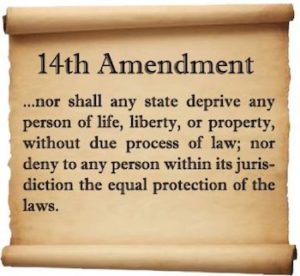
I also brought up the Fourteenth Amendment, which had recently been passed during this period.
I explained that the amendment did not necessarily require the changes that Plessy's lawyers were demanding.
From the perspective of our argument, the amendment established legal equality and protected certain rights, such as the right to own property, make contracts, and have equal protection under the law.
I wanted to show that there was a difference between the legal rights protected by the Fourteenth Amendment and what Plessy's lawyers were arguing should be required under the law.
This helped me support my position and explain why I believed the state of Louisiana was not necessarily violating the amendment in the way the opposing side claimed.
Although the Ferguson side did not win the court case during our classroom trial, I honestly believe my group did a really good job explaining our position and putting up a strong fight.
Even though we did not get the outcome we wanted, I do not think that means we did poorly. I believe we successfully presented our arguments, explained our reasoning, and showed that we understood the historical background of the case.

Each person in my group contributed something important, and I felt that we worked together to defend our side as best as we could.
We were able to explain why we believed what we believed and provide information to support our arguments instead of simply stating our opinions.
One thing I learned from this experience is how important it is to understand both sides of a historical event or court case.
Before participating in this trial, I did not necessarily think about all the different arguments that could be made from the Ferguson side.
Having to defend that side challenged me to look more closely at the laws, amendments, and beliefs that existed during that time period.
It also helped me understand how complicated court cases can be and how the interpretation of laws can affect the outcome of important decisions.
I learned that preparing an argument requires research, confidence, and the ability to explain your thoughts clearly in front of other people.
Overall, I really enjoyed participating in this trial because it gave me the opportunity to experience what it might be like to defend a side in an actual court case.
Even though our group did not win, I am ultimately proud of everyone and the effort we put into our arguments. I think each one of us did a very good job, and we all played a part in representing the Ferguson side.
I am glad that we had the opportunity to participate because it allowed us to learn more about Plessy v. Ferguson while also improving our public speaking, teamwork, and critical-thinking skills.
At the end of the day, I believe we gave it our best effort, stood by our arguments, and did a great job representing our side.

After listening to the presentations about Reconstruction I realized that freedom in America was not something that happened overnight.
Before these presentations I understood Reconstruction as the period after the Civil War when the country was trying to rebuild and give formerly enslaved African Americans more rights. However learning about the first Black members of Congress, the importance of education, and the consequences of the Compromise of 1877 helped me understand how difficult it really was for African Americans to gain equality and have their voices heard.

What stood out to me the most was how many people fought for opportunities that others already had, and how quickly some of those opportunities were taken away
One part of the presentations that caught my attention was the information about Hiram Revels and Joseph H. Rainey. Hiram Revels became the first Black member of Congress and the first Black U.S. senator, representing Mississippi in 1870.

Before entering politics, he was a minister, educator, and Union chaplain. I thought it was important that he used his position to speak against racial segregation and represent people who had been ignored for so long.
Joseph H. Rainey was also an important figure because he became the first Black U.S. representative, representing South Carolina. What made his story especially powerful to me was that he had been born enslaved but eventually became a directly elected member of Congress.
Both men showed that African Americans were capable of holding leadership positions and helping shape the future of the country. Their accomplishments were not just personal achievements; they represented progress for an entire community.
Another topic that stood out to me was the rise of African American education during Reconstruction. I believe education is one of the most important parts of creating opportunities for people, so learning about the challenges Black Americans faced when trying to attend school was upsetting.
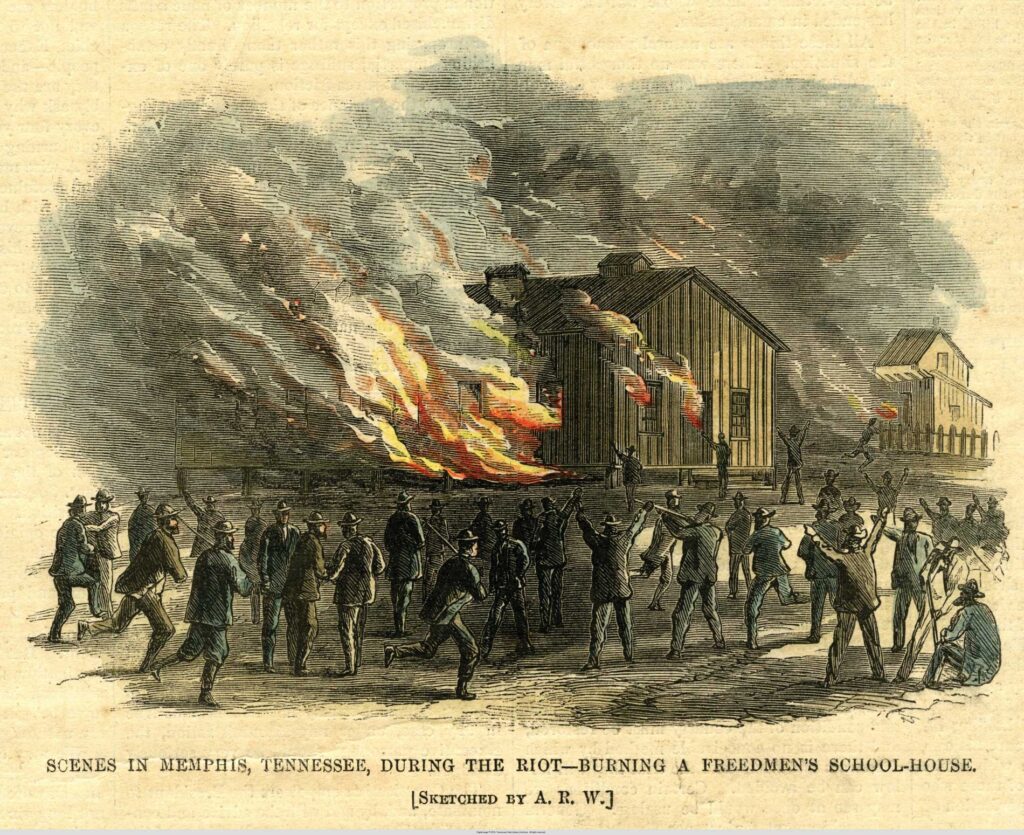
Schools struggled with racism, violence, and a lack of funding. White supremacist groups even attacked teachers and burned school buildings to prevent African Americans from becoming educated. Despite these challenges, historically Black colleges and universities, including Howard University, Fisk University, and Hampton Institute, were founded.
It was inspiring to learn that people continued fighting for education even when others were trying to take those opportunities away.
To me, this shows how much education meant to formerly enslaved people and how they understood that knowledge could help create a better future for themselves and generations after them.
The presentation about the Compromise of 1877 was probably the most surprising part to me because it showed how quickly progress could be lost. After the disputed presidential election of 1876 between Rutherford B. Hayes and Samuel J. Tilden, the Compromise of 1877 helped Hayes become president.
One major part of the compromise involved withdrawing federal troops from the South. This had serious consequences for African Americans because federal protection and enforcement of Reconstruction policies began to disappear.

As a result, Southern governments that opposed Reconstruction gained more power, segregation expanded, and African Americans faced greater barriers to voting and participating in politics.
It was disappointing to learn that after so many people had worked hard to gain basic rights, political decisions could weaken that progress.
Overall, these presentations changed the way I think about freedom in American history.
I used to think of freedom mainly as being released from slavery, but now I understand that freedom also means having equal opportunities, access to education, political representation, and protection under the law.
The stories of Hiram Revels, Joseph Rainey, and the people who fought to establish schools show that African Americans were not simply waiting for change to happen. They were actively working to create change for themselves and their communities.
Overall I thought all the groups did an amazing job and I learned so much from all of them.
AI DISCLOSURE: AI was used. I used Claude AI to shape my notes into a blog post. Claude AI also helped me clean up the text for grammar, spelling, and punctuation. I then edited the text and added images.
After the Civil War came the Reconstruction era, a period of depression that lasted for decades. Violence was used to enforce Jim Crow, and African Americans were stripped of their rights. This documentary tells the true story of reconstructing America.
The war ended on April 9, 1865, which was Palm Sunday, and the slaves were freed. By the summer, many of them had found safe haven. Their actions converted many Americans to emancipation, and freeing the slaves strengthened both the Union and the military.
Reconstruction was the process of American society coming to terms with the consequences of the war. The North and the South saw it very differently.
President Abraham Lincoln gave a speech suggesting that all Black men deserve the right to vote. John Wilkes Booth killed him for making that speech. Andrew Johnson was sworn in next, making him the first president sworn in after an assassination.
During Reconstruction, the Republican Party was the party of civil rights and of African Americans. Johnson believed the planter class caused the war. Frederick Douglass doubted the new president and could tell that Johnson did not like African Americans.
In 1865, Oliver Howard created the Freedmen’s Bureau to make sure Black people were treated fairly and that relations between white and Black Americans were fair on both sides. The Bureau had a lot of land.
Within weeks, things did not go to plan. Johnson was undermining the results of the war, and he thought he could handle Reconstruction perfectly. People he had hated came to him asking for forgiveness. Then Johnson ordered Howard to give all the land back to the Confederates. The freed slaves refused to leave and began to sing. Howard was devastated to see it.
The South was devastated. The Confederates had destroyed their own economy and torn their families apart, and they did not care about freeing the slaves. People were targeted for having a lot of land, and others tried to destroy everything they had. The Republicans were ready to help the South and end its suffering.
Meanwhile, free people were on the move from the farms to the cities. The crowds this created made white southerners angry. They began shooting at freed people and starting violence, hunting for Black people.

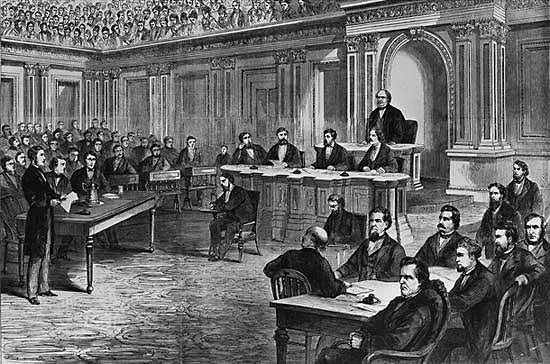
The 14th Amendment gave rights to people and to all Americans. By the spring, the Republicans were in control, and Reconstruction entered a bold new phase. They began to reorganize the South and ratified the 14th Amendment, which became the law of the land in July.

November 3rd was an election day like no other. In New Orleans, white gangs terrorized Black voters, and African Americans had to arm themselves in order to vote because they feared the violence. Every southern state voted for Ulysses S. Grant, who crushed the Confederacy.

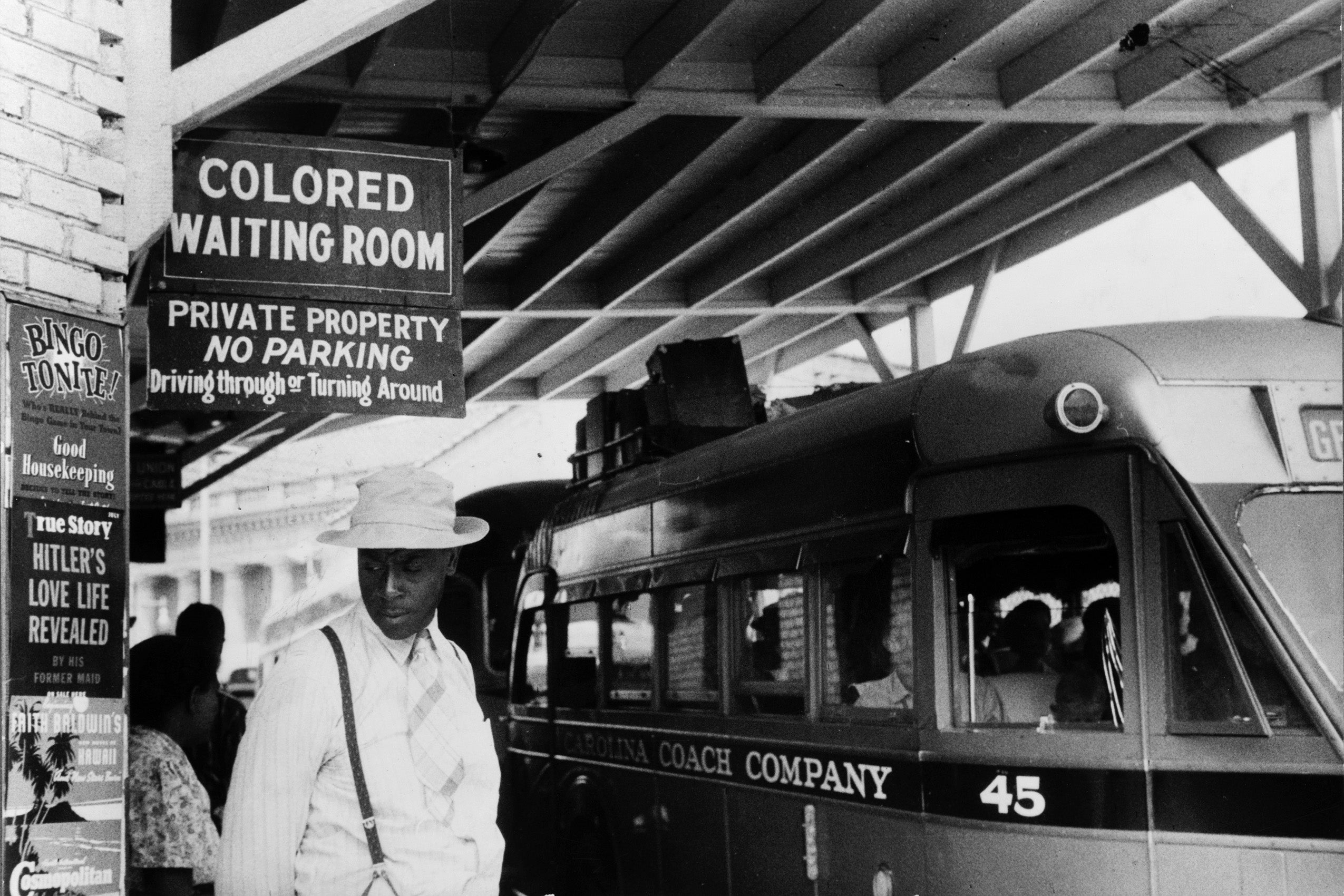
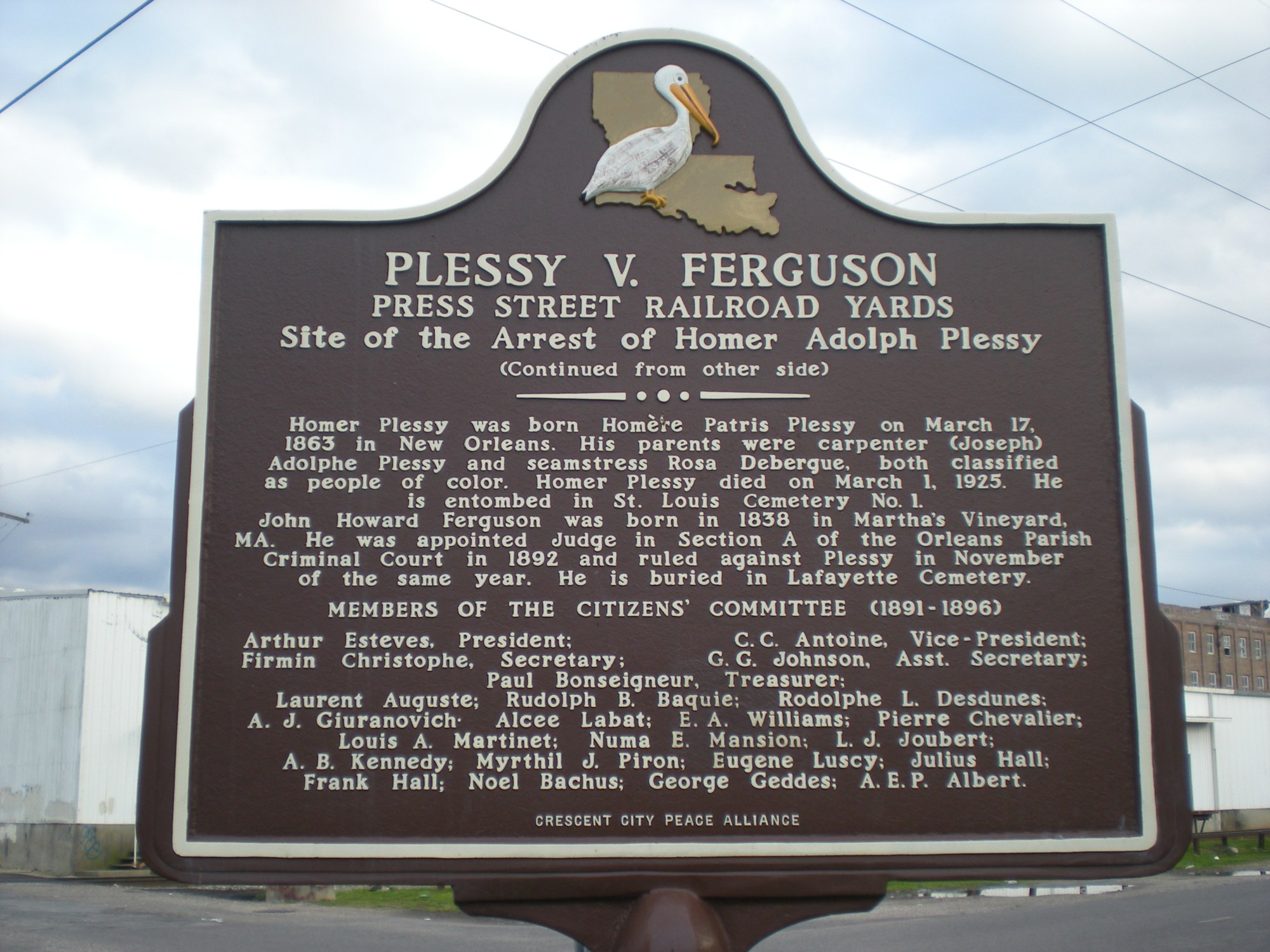
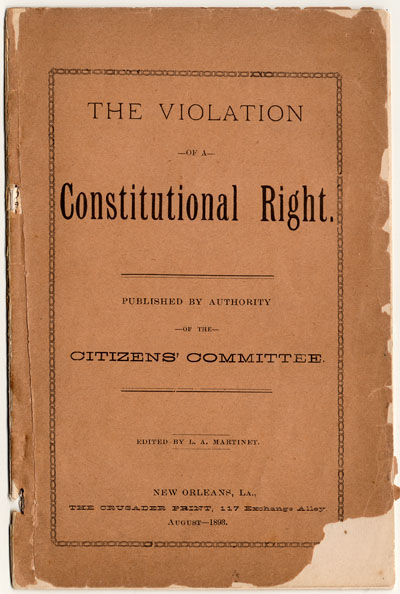
In 1892, Homer Plessy bought a first-class ticket on a Louisiana train, took a seat in the whites-only car, and was arrested. The arrest was planned. A group of New Orleans citizens, the Comité des Citoyens, wanted to challenge Louisiana’s 1890 Separate Car Act, which required “equal but separate” railway accommodations by race. Plessy lost in the state courts, including before Judge John Howard Ferguson, and appealed. In 1896, the U.S. Supreme Court upheld the law seven to one.
To understand why, it helps to follow the argument that won. This post lays out that reasoning, because understanding it is how we learn to recognize it.
Louisiana’s defense rested on the “police power,” a state’s authority to pass reasonable laws protecting public health, safety, and order. The state argued that separating passengers was an ordinary use of that power. Because the law required equal accommodations for both races, it claimed no one was denied anything.

The harder question was what counts as “reasonable.” Writing for the majority, Justice Henry Billings Brown said reasonableness could be measured by the “established usages, customs, and traditions of the people.” In other words, if separation was already common, it was reasonable.
Brown pointed to examples. Massachusetts had upheld segregated schools in Roberts v. City of Boston (1849), and Congress had maintained separate schools in Washington, D.C. If those practices were lawful, the Court reasoned, a separate railcar was too.
The majority also drew a line between two kinds of equality. The Fourteenth Amendment, Brown wrote, was meant to secure legal equality, not to abolish distinctions based on color or enforce social mixing. He added that social prejudice could not be overcome by legislation.
On the claim that segregation stamped Black citizens with a badge of inferiority, Brown said any such meaning existed only because Black Americans chose to put that construction on it.

This is where the case becomes useful for a class on freedom. The reasoning has a built-in problem: custom is made by those with power. If tradition defines what is reasonable, then a majority’s habits can justify nearly anything, and the people harmed by those habits have no way to challenge them.
Justice John Marshall Harlan saw this in his lone dissent. He wrote that the Constitution is “color-blind” and knows no caste, and that everyone understood the law’s real purpose was to keep Black citizens in a subordinate place. He predicted the decision would prove as harmful as Dred Scott.
History largely agreed with him. The “separate but equal” doctrine spread through schools, transportation, and public life, and the facilities were rarely equal. In Brown v. Board of Education (1954), the Court held that separate educational facilities are inherently unequal, undercutting Plessy’s foundation.
Plessy is a lesson in how persuasive an argument can sound when it borrows the language of order, tradition, and restraint. Its central claim, that familiar means reasonable, is one we still hear in other forms. The better question, then and now, is who the custom serves and who was never asked.
![]()
In class today we watched the first half of the movie Gone with the Wind by Margaret Mitchell. Watching this movie has been an interesting experience because the movie is more than just a love story. The film explores different relationships, social expectations, and the effect that war can have on a persons life. Before watching the movie I was expecting it to be a long, slow, and boring love story but I was honestly surprised by how much the story reveals on what the characters are actively living through. Although the film is definitely entertaining it also shows how the Old South is portrayed and how the history is presented through the perspectives of white wealthy southerners.
One of the most entertaining characters so far is Scarlett O'Hara. At the beginning she came off very spoiled, selfish, and accustomed to getting whatever she wants. She loves the attention she gets and seems she can use her beauty and her charm to influence the people around her. Scarlett's feelings for Ashley Wilkes are a major part of the character because deep down she really struggles to accept that he is going to marry someone else. Even after learning that he was going to marry someone else, Ashley continues to pursue him revealing that her pride and her stubbornness usually prevent her from seeing situations clearly. At times I thought that she was very frustrating but interesting at the same time because she was so confident and determined. I am genuinely curious to see how the events of the war will affect her personality or force her to change.
![]()
Rhett Butler is also someone who stands out as one of the most entertaining characters so far because he is also very confident, outspoken, and willing to challenge the expectations of southern society. He is different from a lot of the other characters because Rhett is not concerned with his image or following all the social rules. His interactions with Scarlett are intriguing because he can see her selfishness and is not fooled by her charm. Their conversations usually contain tension, humor, and a lot of competition. I truly believe that Rhett understands Scarlett more than she even understands herself which is why their relationship is so complicated. Although they do seem like they are attracted to each other their personalities create conflicts and get in the way. Their relationship is one of the aspects of the movie I am most interested in following.
The relationship between Ashley, Scarlett, and Melanie also reveals a lot about the characters. Scarlett wants Ashley mostly because she cannot accept the fact he chose someone else. Ashley on the other hand represents everything Scarlett wants romantically. Melanie is portrayed as kind, gentle, and devoted to Ashley which is why she is some different from Scarlett. I believe it is very interesting that Scarlett often underestimates Melanie because she sees her as very weak. However, Melanies kindness and calm personality are signs of strength and not signs of weakness. These differences can show how people can misunderstand one another when they judge others based off of appearance.
Another important part of the film is the way the civil war begins to change all the characters lives. Earlier on in the movie the characters are focused on parties and social statuses. They really seemed to believe that their comfortable lifestyles will continue without major interruptions. However, as the war approached the mood of the film begins to shift. The excitement surrounding the conflict initially makes it seem like some sort of adventure to a bunch of the characters but the consequences are increasingly serious. The war threatens the security and traditions that have shaped all their lives. This change made me think about how people sometimes fail to understand the seriousness of a major event until it directly affects them.
Altogether, The first part of the movie held my attention because of the memorable characters, dramatic relationships, and all the changes in the historical settings. Scarlett is not always likable but all of her determination makes her a compelling character. Rhett adds humor, while Ashley and Melanie provide a contrast to all of Scarletts emotions. The approaching war also creates uncertainty about what will happen to the characters and their way of life. After the intermission I am interested in in seeing how Scarlett responds as the world she knows begins to fall apart. I expect the challenges ahead to reveal more about her character and if she will be able to move past her selfishness so she can be more independent. The film has been engaging but has also reminded me of the importance of questioning how movies portray history and whose experiences they emphasize.

Fellow citizens,
I have been asked why a lawyer and legislator would spend his best years quarreling over the rights of people who cannot vote for him. The answer is simple. The wrong is real, and silence makes us partners in it.
I came to Pennsylvania in 1816 to practice law. I had seen slavery at close range, and I did not need a sermon to tell me what it was. Since then I have defended fugitives in our courts and never charged them a fee. I also spent years in the state legislature defending free public schools, because a people who cannot read cannot govern themselves. Justice that only the wealthy can afford is not justice at all.
In 1837, I sat at the convention that rewrote our state constitution. The delegates wrote in a clause limiting the vote to white freemen, which took the ballot from every Black Pennsylvanian. I refused to sign. A constitution that divides free people by color has no claim on an honest man's signature.
Now, as your representative in Congress, I have watched the Compromise of 1850 pass, and with it the Fugitive Slave Act. Its defenders call it peace. I call it a bargain paid for with other people's liberty.
Consider what the law actually does. A federal commissioner may order a person returned to bondage on the claim of a supposed owner, without testimony or trial. It offers no protection to a free Black man wrongly seized. And it fines or jails any citizen who aids a fugitive. Such a law asks each of us to become a slave catcher or a criminal.
I told the House that I abhor the word compromise when it is applied to human rights. I have not changed my mind. Rights are not goods to be haggled over across a table. Either a person owns himself, or he does not.
Some will say this is not Pennsylvania's fight. I say it is exactly our fight. A free state that hunts men on behalf of another state's masters has surrendered its own dignity. We cannot call ourselves free while we help enforce bondage.
The consequences are already at our door. When Black men accused of killing slave hunters at Christiana stood trial in our own county, I stood with them. We won that case, and I would take it again.
So what do I ask of you tonight? Refuse to lend your hands to this law. Stand with those who resist it. And tell your representatives that freedom for every person is not open to bargaining.
History will not remember those who kept the peace at any price. It will remember who stood with liberty when it was costly. Let us be found among them.
AI DISCLOSURE: AI was used. I put in a prompt to tell me about Thaddeus Stevens and then did research on it. I used Claude AI to help me clean up the text for grammar, spelling, and punctuation. I also asked the tool to help me shape it into the form of a blog post. I then edited the text, added links, and added images with end captions.